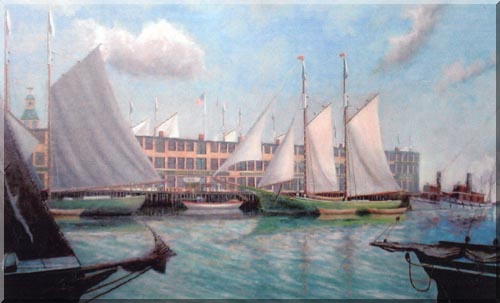
By
1885, T-Wharf, formerly located between Long Wharf and Commercial
Wharf, had become the bustling center of Boston's fishing industry.
Thirty fish dealers located in wooden stores along the wharf were
supplied by hundreds of fishing schooners arriving from the rich fish
banks of the North Atlantic. Men pushing carts of fish, horse wagons
loaded with ice and salt, fishermen, tug boat captains, fish buyers
and sellers worked on the waterfront laden with the smell of fish,
salt, tar, and coal smoke. After a rainfall, the sails of schooners
were often hoisted up the masts to dry in the sun if there was no
wind. This helped to prevent mildew in the sails, which could weaken
the canvas. After about 1914, when the Boston Fish Pier in South Boston
displaced T-Wharf as the center of commercial fishing for the city,
the pier went into a gradual decline, which ended with its removal
in the 1980s. This image compliments Halibut Wharf, Gloucester
1898, when they are hung on the same wall or in the
same room.